


Technical Specifications (Highlights)
Clinical Applications
The BT-380 is ideal for:
Workflow Benefits
Safety & Accuracy First
The BT-380 is designed with patient safety at its core. The cross-channel verification alarm actively prevents one of the most common monitoring errors in twin pregnancies. Combined with automated CTG analysis and high-contrast trace display, the BT-380 reduces cognitive load on clinicians while increasing diagnostic confidence.
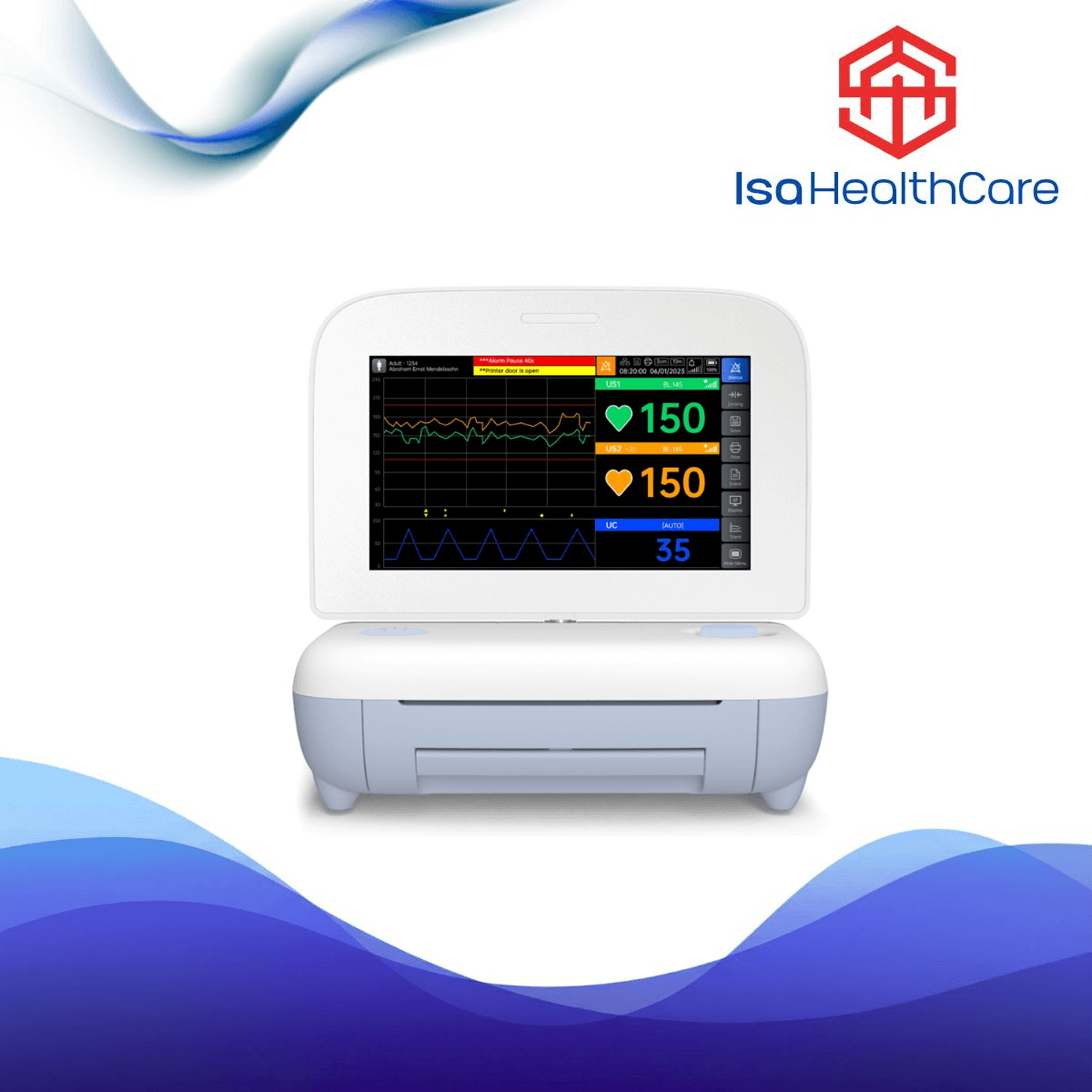
The BT-380 Fetal & Maternal Monitor is a premium, all-in-one telemetry system engineered for modern labor & delivery units, high-risk pregnancy wards, and maternal-fetal medicine clinics. Combining advanced cardiotocography (CTG) with full maternal vital signs monitoring, the BT-380 delivers real-time, actionable data to help clinicians make faster, more confident decisions.
With its 10.1-inch high-resolution color touch display, intelligent cross-channel verification for twin pregnancies, and comprehensive parameter set — including optional fetal ECG (FECG) — the BT-380 sets a new standard in obstetric patient monitoring.
Why the BT-380?
In obstetrics, every second and every data point matters. The BT-380 is built to reduce ambiguity, eliminate miscalculations, and provide a complete clinical picture — for both mother and fetus — on a single, intuitive screen. Whether you are managing a routine delivery or a complex twin gestation, the BT-380 provides the reliability and depth you need.
Key Clinical Features
The large, vibrant touchscreen displays fetal heart rate traces, contraction patterns, and numerical vital signs simultaneously. The interface is designed for fast interpretation in high-stress environments. Stored data can be reviewed later for detailed analysis, reporting, or patient record updates.
The BT-380 doesn’t just show waveforms — it interprets them. The system automatically calculates:
This reduces manual documentation errors and speeds up clinical decision-making.
One of the most dangerous errors in twin gestation monitoring is miscalculating one fetus’s heart rate as the other’s. The BT-380’s cross-channel verification function prevents this by cross-referencing signals and triggering intelligent alarms when discrepancies are detected. This feature is critical for preventing misdiagnosis and ensuring each fetus is accurately tracked.
| Category | Parameters |
| Fetal Monitoring | Fetal Heart Rate (FHR), Uterine Contractions (UC), Fetal ECG (FECG)* |
| Maternal Monitoring | ECG, Non-Invasive Blood Pressure (NIBP), Oxygen Saturation (SpO₂), Temperature (TEMP) |
*FECG is an optional module.
By combining fetal and maternal parameters in one device, the BT-380 eliminates the need for separate monitors, reduces cable clutter, and streamlines workflows.